
Create Apps Easily on Your Own with the Low-Code Platform
Simple user interfaces allow you to configure entire business applications yourself, immediately and without the help of a development team. Integrate data and applications quickly with the help of the CAS LC-X low-code platform. With CAS LC-X, you can efficiently create solutions for your employees with minimal programming effort, and it enables intuitive and quick configuration of applications. CAS LC-X enables you to easily create applications (apps) on your own, even with limited programming knowledge and little development experience, thereby supporting your business automation.
Save time and resources, and take advantage of the wide range of possibilities this low-code platform offers.
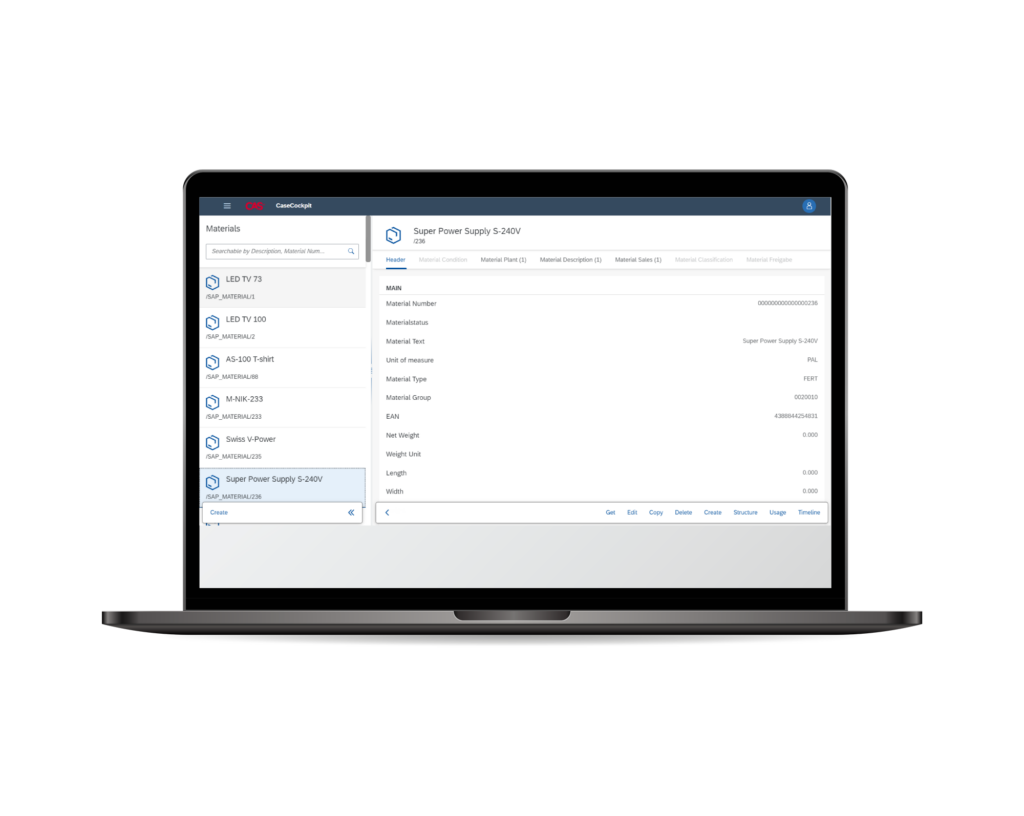
Create Your Own Apps Easily
Using the Low-Code Platform
Simple user interfaces allow you to configure entire business applications yourself, immediately and without the help of a development team. Integrate data and applications quickly with the help of the CAS LC-X low-code platform. With CAS LC-X, you can efficiently create solutions for your employees with minimal programming effort, and it enables intuitive and quick configuration of applications. CAS LC-X enables you to easily create applications (apps) on your own, even with limited programming knowledge and little development experience, thereby supporting your business automation.
Save time and resources, and take advantage of the wide range of possibilities this low-code platform offers.
Create Your Own Apps Easily
Using the Low-Code Platform
Simple user interfaces allow you to configure entire business applications yourself, immediately and without the help of a development team. Integrate data and applications quickly with the help of the CAS LC-X low-code platform. With CAS LC-X, you can efficiently create solutions for your employees with minimal programming effort, and it enables intuitive and quick configuration of applications. CAS LC-X enables you to easily create applications (apps) on your own, even with limited programming knowledge and little development experience, thereby supporting your business automation.
Save time and resources, and take advantage of the wide range of possibilities this low-code platform offers.
Our expertise
Creating User Interfaces, Services, Integrations, and Processes Using the CAS LC-X Low-Code Platform
Quickly model dynamic user interfaces and complex dashboards. Support your customers, suppliers, and employees. CAS LC-X enables the implementation of business automation, services, easy integrations, and much more.
What sets CAS LC-X apart from other low-code platforms?
To successfully implement low-code in a company, you also need low-code interfaces, low-code services, low-code integration, and low-code process management. CAS LC-X is not limited to standalone apps; it also addresses event-driven control and the integration of applications into a company’s overall business processes and business data.
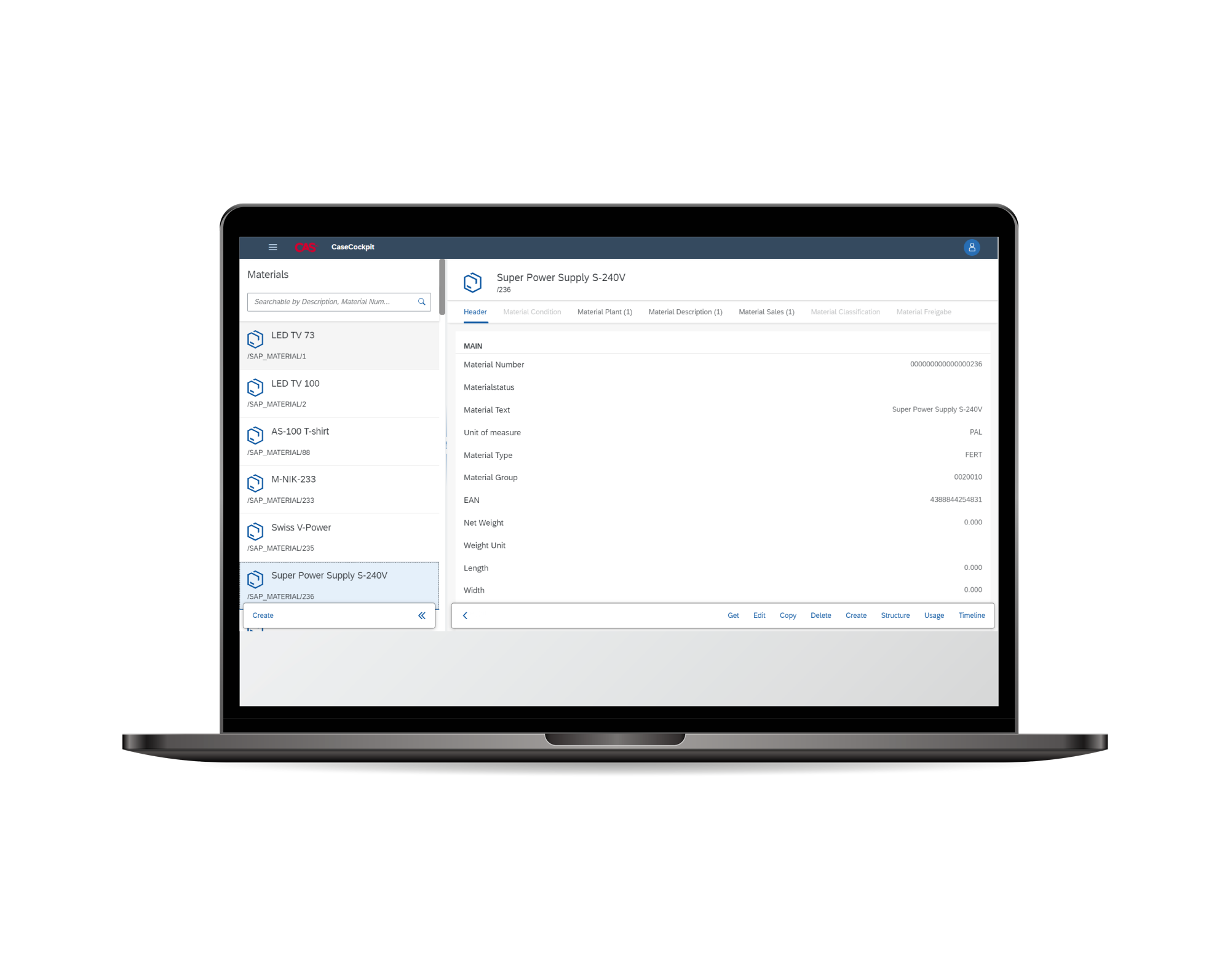
Examples of Applications (SAP)
- Master Data (Master Data Management)
- CRM (Customer Relationship Management)
- Purchase Requisitions
- Product Configuration
- Product Costing
- Rules
- Visualizations Using Charts
Examples of Integration
- Integrating SAP data into various applications
- SAP-Jira Integration
-
- Managing Tasks in Jira and Tracking Costs in SAP
- Managing an Engineering Change Management Process in SAP Using Jira
- Track time spent in Jira using a worklog and bill it in SAP
- SAP Solution Manager and Jira are optimally integrated to enable more efficient workflows
- SAP-Salesforce Integration
- SAP PLM/CAD Integration
X-dimensional applications
Whether it’s customer-focused applications and portals, service apps for data monitoring, or business automation—such as process automation or process management—use CAS LC-X however you like!
Low-Code for SAP Integrations
Integrating SAP data into various applications (such as SAP-Jira, SAP-Salesforce, and SAP-PLM)
Save time and resources
Grant employees access to information and features, quickly and easily map countless use cases, and intuitively configure applications
Agility
Use this low-code development platform to create new rules, controls, or monitoring features at any time
X-dimensional applications
Whether it’s customer-focused applications and portals, service apps for data monitoring, or business automation—such as process automation or process management—use CAS LC-X however you like!
Low-Code for SAP Integrations
Integrating SAP data into various applications (such as SAP-Jira, SAP-Salesforce, and SAP-PLM)
Save time and resources
Grant employees access to information and features, quickly and easily map countless use cases, and intuitively configure applications
Use this low-code development platform to create new rules, controls, or monitoring features at any time
X-dimensional applications
Whether it’s customer-focused applications and portals, service apps for data monitoring, or business automation—such as process automation or process management—use CAS LC-X however you like!
Low-Code for SAP Integrations
Integrating SAP data into various applications (such as SAP-Jira, SAP-Salesforce, and SAP-PLM)
Save time and resources
Grant employees access to information and features, quickly and easily map countless use cases, and intuitively configure applications
Agility
Use this low-code development platform to create new rules, controls, or monitoring features at any time
To successfully implement low-code in a company, you also need low-code interfaces, low-code services, low-code integration, and low-code process management. CAS LC-X is not limited to standalone apps; it also addresses event-driven control and the integration of applications into a company’s overall business processes and business data.
Use a practical example to learn how to configure applications quickly and intuitively, and what use cases can be supported. Easily create professional applications for your business yourself!
To successfully implement low-code in a company, you also need low-code interfaces, low-code services, low-code integration, and low-code process management. CAS LC-X is not limited to standalone apps; it also addresses event-driven control and the integration of applications into a company’s overall business processes and business data.
Use a practical example to learn how to configure applications quickly and intuitively, and what use cases can be supported. Easily create professional applications for your business yourself!
What Sets CAS LC-X Apart from Other Low-Code Platforms?
To successfully implement low-code in a company, you also need low-code interfaces, low-code services, low-code integration, and low-code process management. CAS LC-X is not limited to standalone apps; it also addresses event-driven control and the integration of applications into a company’s overall business processes and business data.
Use a practical example to learn how to configure applications quickly and intuitively, and what use cases can be supported. Easily create professional applications for your business yourself!
FAQ: CAS LC-X Low-Code Platform
1. What is a low-code platform?
Low-code platforms help companies build applications with minimal programming effort. CAS LC-X connects interfaces, services, integrations, and processes.
2. What does a low-code platform do?
For example, a low-code platform can be used to create applications for master data, CRM, purchase requisitions, product configurations, cost estimates, and dashboards.
3. What are the benefits of a low-code platform?
A low-code platform increases business agility. New rules, controls, and monitoring measures can be implemented quickly in response to changing requirements.
4. How can companies create applications on their own without any programming?
Intuitive user interfaces make it possible to configure applications, services, and processes on your own without extensive development knowledge.
5. How does CAS AG support companies with its low-code platform, CAS LC-X?
CAS AG uses CAS LC-X to help companies configure custom applications, integrate existing systems, and automate business processes.
FAQ: CAS LC-X Low-Code Platform
1. What is a low-code platform?
Low-code platforms help companies build applications with minimal programming effort. CAS LC-X connects interfaces, services, integrations, and processes.
2. What does a low-code platform do?
For example, a low-code platform can be used to create applications for master data, CRM, purchase requisitions, product configurations, cost estimates, and dashboards.
3. What are the benefits of a low-code platform?
A low-code platform increases business agility. New rules, controls, and monitoring measures can be implemented quickly in response to changing requirements.
4. How can companies create applications on their own without any programming?
Intuitive user interfaces make it possible to configure applications, services, and processes on your own without extensive development knowledge.
5. How does CAS AG support companies with its low-code platform, CAS LC-X?
CAS AG uses CAS LC-X to help companies configure custom applications, integrate existing systems, and automate business processes.
FAQ: CAS LC-X Low-Code Platform
1. What is a low-code platform?
Low-code platforms help companies build applications with minimal programming effort. CAS LC-X connects interfaces, services, integrations, and processes.
2. What does a low-code platform do?
For example, a low-code platform can be used to create applications for master data, CRM, purchase requisitions, product configurations, cost estimates, and dashboards.
3. What are the benefits of a low-code platform?
A low-code platform increases business agility. New rules, controls, and monitoring measures can be implemented quickly in response to changing requirements.
4. How can companies create applications on their own without any programming?
Intuitive user interfaces make it possible to configure applications, services, and processes on your own without extensive development knowledge.
5. How does CAS AG support companies with its low-code platform, CAS LC-X?
CAS AG uses CAS LC-X to help companies configure custom applications, integrate existing systems, and automate business processes.