Therapid implementation of the e-invoicing requirement with a centralized solution
The e-invoicing requirement in the B2B sector will become mandatory for many companies starting in 2027. In addition to meeting legal requirements, this also presents an opportunity for your company to streamline existing processes and lay the groundwork for further steps toward digitalization.
E-Invoicing Requirement Implement
Wie You already know, the Growth Opportunities Act includes the legislative amendment regarding the e-invoicing requirement (European Directive 2014/55/EU or EN16931) enshrined, which since January 1, 2025 almost all domesticn B2B-Companies on this topic required, invoices in a in an electronic, structured format . These are not simple PDFs, but machine-readable formats such as XRechnung or ZUGFeRD, which enable automated processing.
Step-by-Step Introduction
by 2028
In particular, the requirement to issue machine-readable invoices will take effect in the coming years, meaning that the obligation to receive and process them will now also become essential.
Depending on the size of the company (revenue of > 800,000 euros), transitional provisions remain in effect until December 31, 2027; however, starting in 2028, the exchange of machine-readable invoices will be mandatory for all companies. EDI connections using standard formats, such as EDIFACT or EANCOM, can be maintained under certain conditions.
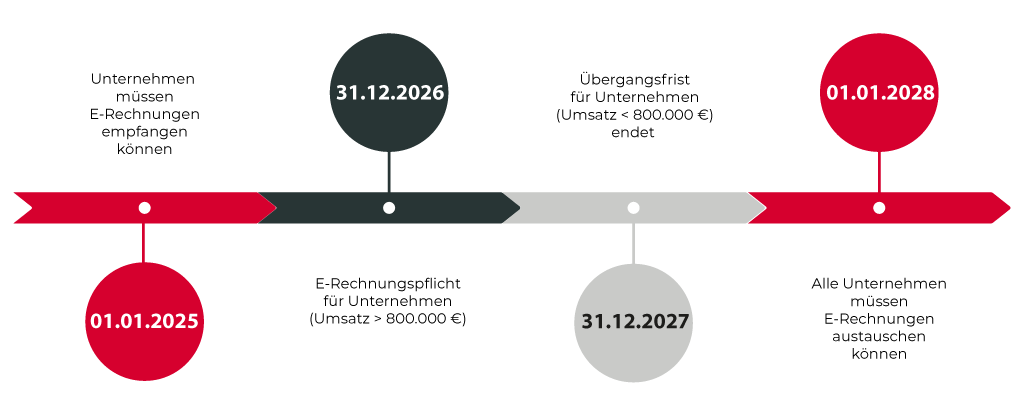
With the full implementation of the e-invoicing requirement set for 2028 at the latest, companies should begin addressing the following requirements now:
Be able to create, send, and receive machine-readable invoices
Comply with legal requirements for archiving and retention obligations
Create a technical infrastructure that enables electronic invoice processing
Digitize Invoice Review and Approval Processes
Check existing processes for compliance, such as invoice issuance in brick-and-mortar retail
Wie You already know, the Growth Opportunities Act includes the legislative amendment regarding the e-invoicing requirement (European Directive 2014/55/EU or EN16931) enshrined, which since January 1, 2025 almost all domesticn B2B-Companies on this topic required, invoices in a in an electronic, structured format . These are not simple PDFs, but machine-readable formats such as XRechnung or ZUGFeRD, which enable automated processing.
Step-by-Step Introduction
by 2028
In particular, the requirement to issue machine-readable invoices will take effect in the coming years, meaning that the obligation to receive and process them will now also become essential.
Depending on the size of the company (revenue of > 800,000 euros), transitional provisions remain in effect until December 31, 2027; however, starting in 2028, the exchange of machine-readable invoices will be mandatory for all companies. EDI connections using standard formats, such as EDIFACT or EANCOM, can be maintained under certain conditions.
With the full implementation of the e-invoicing requirement set for 2028 at the latest, companies should begin addressing the following requirements now:
Be able to create, send, and receive machine-readable invoices
Comply with legal requirements for archiving and retention obligations
Create a technical infrastructure that enables electronic invoice processing
Digitize Invoice Review and Approval Processes
Check existing processes for compliance, such as invoice issuance in brick-and-mortar retail
Schedule an exchange!