
EDI – Digital Partner Communication
for modern supply chains
Initially used as a technical standard for exchanging orders, shipping notices, or invoices, EDI is now more important than ever due to advancing digitalization, the growing platform economy, and data-driven business models.
A high-performance EDI system enables structured and automated data exchange with your business partners—such as logistics providers, suppliers, etc.—and facilitates efficient, transparent, and scalable processes throughout the entire value chain.
Your Benefits:
- Strong Connections: Seamless Integration of All Partners and Systems
- Standardized Processes: Fewer Errors, Less Effort, Greater Speed
- Real-Time Transparency: End-to-End Visibility into Data and Processes in Real Time
- Future-Proof: Scalable Solutions for Growing Needs
- Foundation: Intelligent Automation
- Foundation: Data-Driven Decisions and AI-Supported Business Processes
EDI Integration – Digital Partner Communication
for modern supply chains
Initially used as a technical standard for exchanging orders, shipping notices, or invoices, EDI is now more important than ever due to advancing digitalization, the growing platform economy, and data-driven business models.
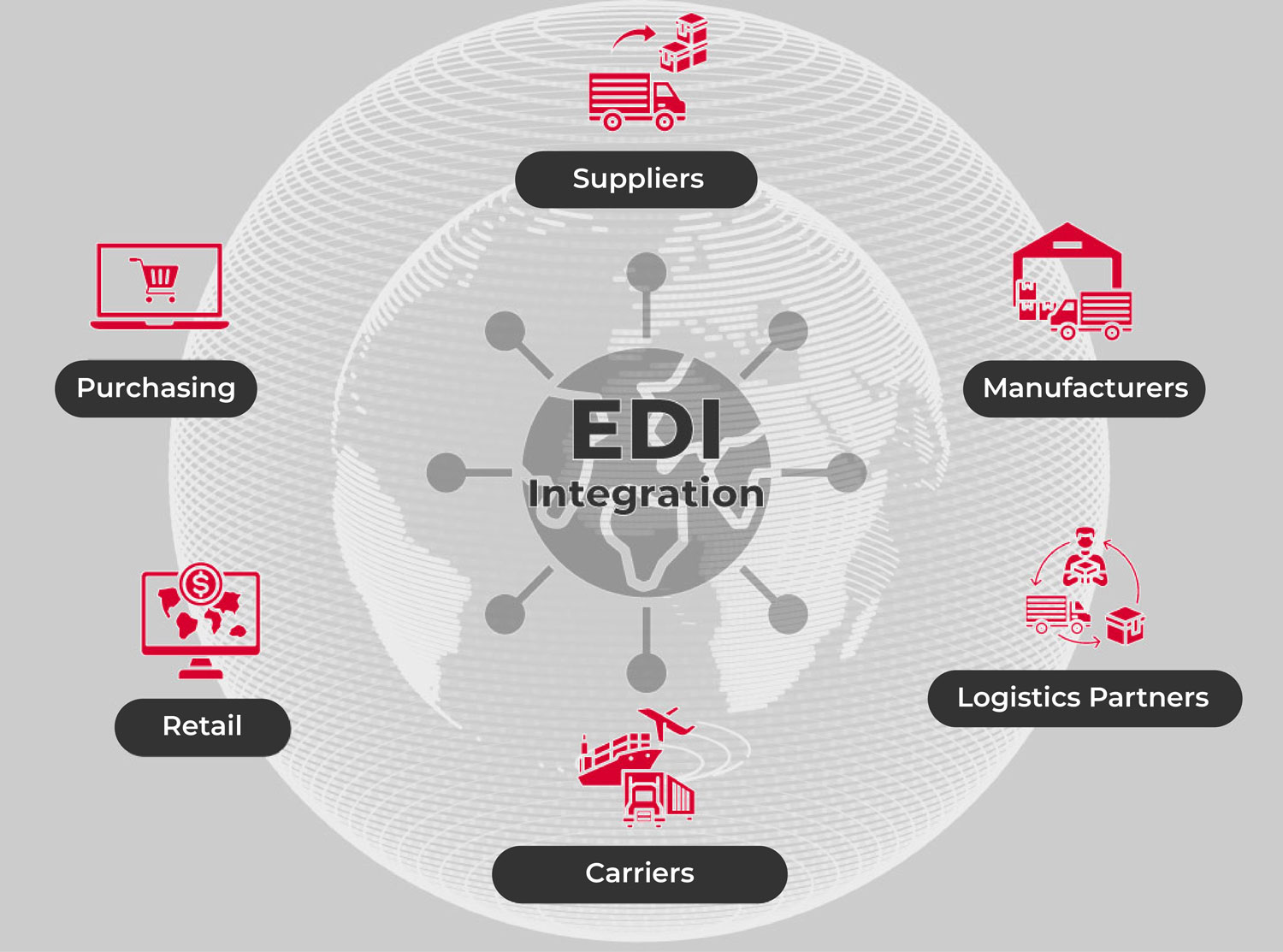
A high-performance EDI system enables structured and automated data exchange with your business partners—such as logistics providers, suppliers, etc.—and facilitates efficient, transparent, and scalable processes throughout the entire value chain.
Your Benefits:
- Strong Connections: Seamless Integration of All Partners and Systems
- Standardized Processes: Fewer Errors, Less Effort, Greater Speed
- Real-Time Transparency: End-to-End Visibility into Data and Processes in Real Time
- Future-Proof: Scalable Solutions for Growing Needs
- Foundation: Intelligent Automation
- Foundation: Data-Driven Decisions and AI-Supported Business Processes
EDI Integration – Digital Partner Communication for Modern Supply Chains
From a Simple Data Exchange Solution to a Strategic Integration Platform
Initially used as a technical standard for exchanging orders, shipping notices, or invoices, EDI is now more important than ever due to advancing digitalization, the growing platform economy, and data-driven business models.
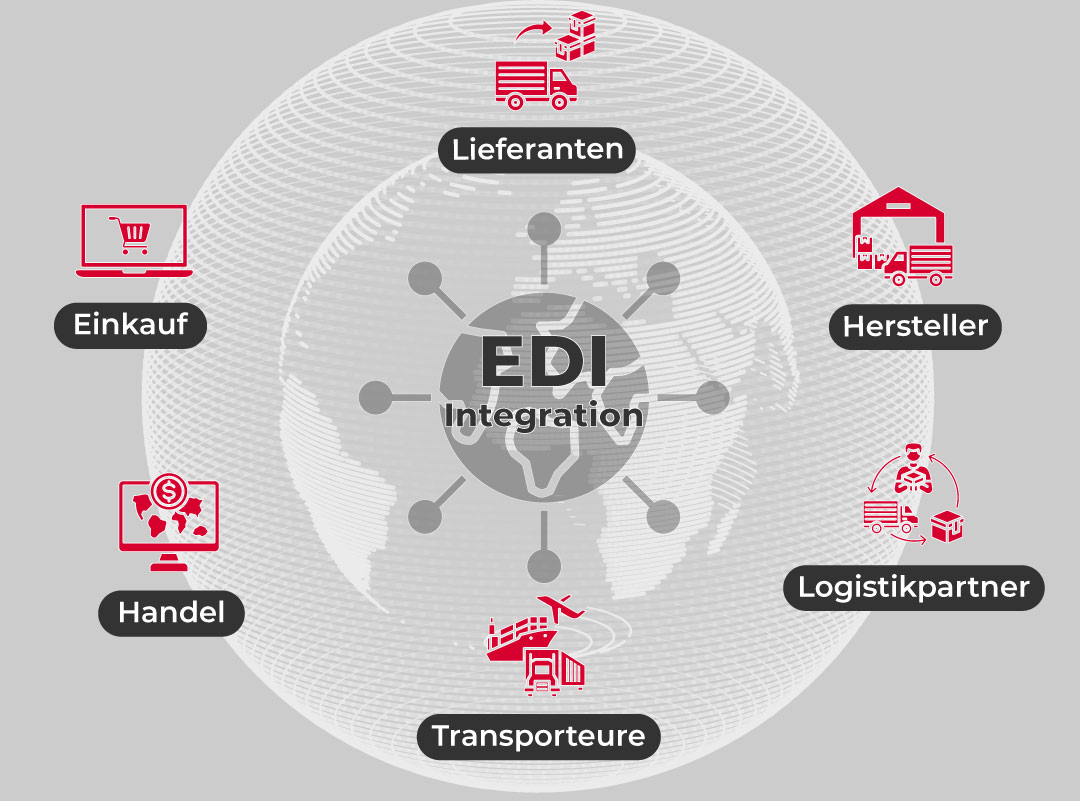
A high-performance EDI system enables structured and automated data exchange with your business partners—such as logistics providers, suppliers, etc.—and facilitates efficient, transparent, and scalable processes throughout the entire value chain.
Your Benefits:
- Strong Connections: Seamless Integration of All Partners and Systems
- Standardized Processes: Fewer Errors, Less Effort, Greater Speed
- Real-Time Transparency: End-to-End Visibility into Data and Processes in Real Time
- Future-Proof: Scalable Solutions for Growing Needs
- Foundation: Intelligent Automation
- Foundation: Data-Driven Decisions and AI-Supported Business Processes
Our expertise
EDI Consulting and EDI Integration—From Strategy to Operations
As EDI specialists and trusted advisors, we support you throughout the entire lifecycle of your EDI and B2B integration landscape. As part of our EDI consulting services, we assist you in developing a comprehensive EDI strategy —from strategic planning to operational implementation.
We combine EDI consulting with technical EDI integration and ensure efficient EDI implementation, in which systems, data, and partner structures are integrated into a high-performance integration architecture.
Our Services:
- EDI Strategy & Architecture
- Implementation & Transformation
- Partner Integration & Onboarding
- Security & Compliance
- Operations & Managed Services
- Coaching & Enablement
Modern EDI Integration & Transformation
Why is EDI important—and why is it even more important today than ever before?
With the ongoing digital transformation, the rise of the platform economy, and data-driven business models, EDI is more important today than ever before. In addition to traditional business processes, new regulatory requirements—such as the mandatory use of electronic invoicing in Germany and Europe—are becoming increasingly important and are fundamentally changing digital communication. Structured formats, standardized processes, and increasing reporting requirements are adding to the pressure. Without modern integration architecture, it will be difficult to keep up. Companies must seamlessly integrate EDI, e-invoicing, and compliance while creating flexible, scalable processes.
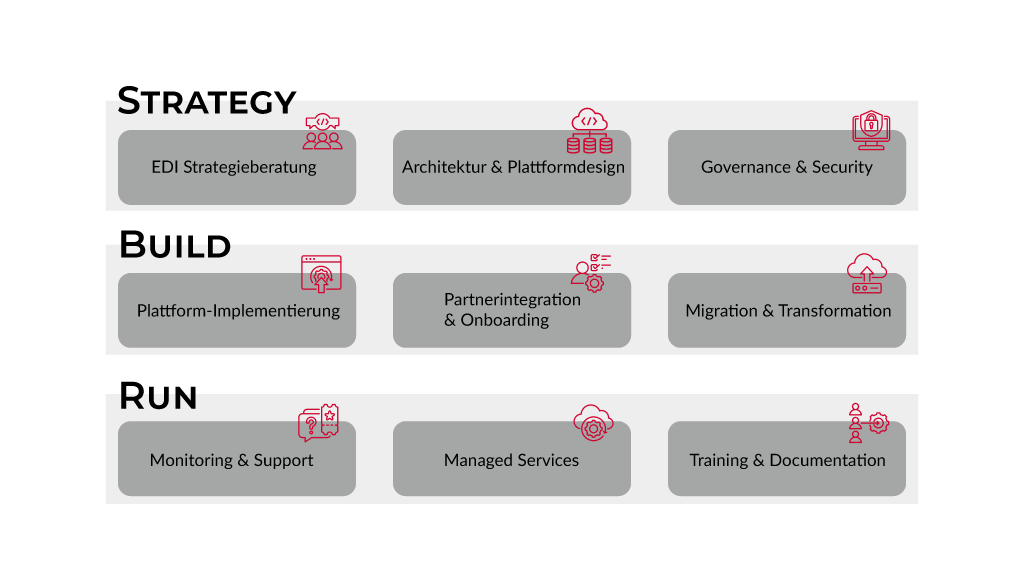
That’s exactly where we come in. Using our proven process model, we carry out modern EDI implementation and transformation, whether it involves further development, realignment, or platform development. We are experts in designing modern integration architectures that combine traditional EDI processes with API-based and event-driven integration patterns. The result is agile integration environments, fast processes, and transparent data flows.
Design and implementation of scalable integration platforms for EDI and B2B processes—from architecture to migration and integration of existing systems such as SAP.
Structured integration of business partners through analysis, segmentation, and onboarding, as well as end-to-end support for specifications, testing, and rollout.
Establishing integration governance, clear roles and responsibilities, and developing target models and organizational integration between IT and business units.
Ensuring stable operations through monitoring, support, and managed services, as well as end-to-end support for integration platforms.
Building sustainable skills through training, workshops, and coaching, as well as targeted professional development for subject-matter and IT teams.
Ensuring compliance with legal requirements such as e-invoicing, reporting, and digital record-keeping obligations, as well as integrating compliance into existing processes.
Design and implementation of scalable integration platforms for EDI and B2B processes—from architecture to migration and integration of existing systems such as SAP.
Structured integration of business partners through analysis, segmentation, and onboarding, as well as end-to-end support for specifications, testing, and rollout.
Establishing integration governance, clear roles and responsibilities, and developing target models and organizational integration between IT and business units.
Ensuring stable operations through monitoring, support, and managed services, as well as end-to-end support for integration platforms.
Building sustainable skills through training, workshops, and coaching, as well as targeted professional development for subject-matter and IT teams.
Ensuring compliance with legal requirements such as e-invoicing, reporting, and digital record-keeping obligations, as well as integrating compliance into existing processes.
Integration Architecture & Implementation
Design and implementation of scalable integration platforms for EDI and B2B processes—from architecture to migration and integration of existing systems such as SAP.
Partner Integration & Onboarding
Structured integration of business partners through analysis, segmentation, and onboarding, as well as end-to-end support for specifications, testing, and rollout.
Organization & Governance
Establishing integration governance, clear roles and responsibilities, and developing target models and organizational integration between IT and business units.
Operations & Managed Services
Ensuring stable operations through monitoring, support, and managed services, as well as end-to-end support for integration platforms.
Training & Enablement
Building sustainable skills through training, workshops, and coaching, as well as targeted professional development for subject-matter and IT teams.
Regulatory Affairs & Compliance
Ensuring compliance with legal requirements such as e-invoicing, reporting requirements, and digital record-keeping obligations, as well as integrating compliance requirements into existing processes.
EDI (Electronic Data Interchange) FAQ
1. What is Electronic Data Interchange (EDI), and how does it work?
EDI stands for Electronic Data Interchange and refers to the structured and automated exchange of business data between IT systems using standardized formats and protocols. This enables companies to efficiently exchange documents such as purchase orders, shipping notices, and invoices with business partners digitally.
2. What benefits does EDI offer businesses and supply chains?
EDI enables seamless connections between partners and systems, as well as standardized and faster processes. Companies benefit from real-time transparency, reduced manual effort, and a scalable foundation for automation and data-driven business processes.
3. How is EDI implemented in SAP and other ERP systems?
CAS AG designs and implements scalable integration platforms for EDI and existing systems such as SAP. In the process, data, systems, and partner structures are migrated into a high-performance integration architecture.
4. What role does EDI play in the e-invoicing requirement?
New regulatory requirements, such as the mandate for electronic invoicing, are increasing the importance of standardized and digital processes. Companies must seamlessly integrate EDI, e-invoicing, and compliance to efficiently meet reporting and documentation requirements.
5. How does CAS AG provide support for EDI projects?
CAS AG supports companies with EDI consulting, strategy development, technical implementation, as well as operations and managed services. This is complemented by coaching, governance models, and support with compliance and e-invoicing requirements.
EDI (Electronic Data Interchange) FAQ
1. What is Electronic Data Interchange (EDI), and how does it work?
EDI stands for Electronic Data Interchange and refers to the structured and automated exchange of business data between IT systems using standardized formats and protocols. This enables companies to efficiently exchange documents such as purchase orders, shipping notices, and invoices with business partners digitally.
2. What benefits does EDI offer businesses and supply chains?
EDI enables seamless connections between partners and systems, as well as standardized and faster processes. Companies benefit from real-time transparency, reduced manual effort, and a scalable foundation for automation and data-driven business processes.
3. How is EDI implemented in SAP and other ERP systems?
CAS AG designs and implements scalable integration platforms for EDI and existing systems such as SAP. In the process, data, systems, and partner structures are migrated into a high-performance integration architecture.
4. What role does EDI play in the e-invoicing requirement?
New regulatory requirements, such as the mandate for electronic invoicing, are increasing the importance of standardized and digital processes. Companies must seamlessly integrate EDI, e-invoicing, and compliance to efficiently meet reporting and documentation requirements.
5. How does CAS AG provide support for EDI projects?
CAS AG supports companies with EDI consulting, strategy development, technical implementation, as well as operations and managed services. This is complemented by coaching, governance models, and support with compliance and e-invoicing requirements.
EDI (Electronic Data Interchange) FAQ
1. What is Electronic Data Interchange (EDI), and how does it work?
EDI stands for Electronic Data Interchange and refers to the structured and automated exchange of business data between IT systems using standardized formats and protocols. This enables companies to efficiently exchange documents such as purchase orders, shipping notices, and invoices with business partners digitally.
2. What benefits does EDI offer businesses and supply chains?
EDI enables seamless connections between partners and systems, as well as standardized and faster processes. Companies benefit from real-time transparency, reduced manual effort, and a scalable foundation for automation and data-driven business processes.
3. How is EDI implemented in SAP and other ERP systems?
CAS AG designs and implements scalable integration platforms for EDI and existing systems such as SAP. In the process, data, systems, and partner structures are migrated into a high-performance integration architecture.
4. What role does EDI play in the e-invoicing requirement?
New regulatory requirements, such as the mandate for electronic invoicing, are increasing the importance of standardized and digital processes. Companies must seamlessly integrate EDI, e-invoicing, and compliance to efficiently meet reporting and documentation requirements.
5. How does CAS AG provide support for EDI projects?
CAS AG supports companies with EDI consulting, strategy development, technical implementation, as well as operations and managed services. This is complemented by coaching, governance models, and support with compliance and e-invoicing requirements.